
The Review Man
Currently reading








I'm back! This is my first serious activity here in over two months. I'm afraid I may have lost the touch...
Review coming soon. For now, suffice it to say that I'm deeply biased toward DFW's writing, and this collection of non-fiction essays is no exception.
 4
4
Baudrillard takes on what would later become the digital world, and it ain't pretty. As Marx is to the obscenity of the commodity, so is Baudrillard to the ecstasy of communication. Baudrillard contends that our preoccupation has shifted to the overexposure of the transparency of the world: as such we are like visitors to a hyperrealist art gallery, staring at an image where there is nothing to see. A forceful critique, and one that is not easy to read, but a necessary one nonetheless.
Booklikes isn't quite doing it for me, but I'm sure as heck not going back to Goodreads. Maybe I'll just write reviews for myself and share them with friends instead of posting them online.

This is another charming Shakespeare play. The dialogue is snappy as ever and while there is some moderate peril, this time the friar's advice proves sage. A great way to spend a few hours, and just what I needed after what has likely been the most depressing September on record.
Last night I posted how I was fed up with the Goodreads wars, and today here I am.
I've always been interested in literary criticism, but I also have some fairly strong opinions about art. I'm trying to figure out how to balance this. Maybe this will be the place to do just that.
 1
1
This book came to me at a strange time. Normally I would give a book like this two stars and be done with it. But not now. I am going through something of a minor existential crisis, and as a result, I am taking some time off so as to focus on things of import.
The plot of this book is not really key—it's about a guy who rides his motorcycle around America and is not so nice to his son and talks a lot about a philosophical notion of Quality that is quite possibly too vague for my math-addled brain to appreciate. But the act of reading something intentionally (normally I speed-read, but here I took my time), and something that was at least tangential to philosophy and self-actualization at that, kick-started my brain.
Maybe Pirsig's notion of Quality is incredibly useful; maybe it's not that helpful. At first glance it does a good job of resolving the old subjective–objective aesthetics debate that's plagued me for a while, although I haven't really made my mind up as to the particulars. But at least it has me thinking, and I'm excited to see the results.
The Canadian Constitution
 Adam Dodek dedicated this book to his son, who wanted his father to write a book in the "humour" genre. I suppose this is as close to funny as you can get when it comes to the Constitution.
This is not a bad book, although it is very short. The Canadian Constitution is freely available online (well, at least the written parts are—Canada's constitution features "unwritten Constitutional principles" that make life more than a little interesting) but this book annotates the sections and provides some background. There's also a brief introduction to the history of Canadian politics as it relates to the Constitution; it's helpful to read before diving into the Constitution Act, 1867 or the Constitution Act, 1982.
A few small problems plague this book. There are some formatting inconsistencies (for example, the British North America Act is referred to as the B.N.A. Act, the B.N.A Act and the BNA Act; which is it?) and the like, but that's nothing that can't be fixed by a second edition.
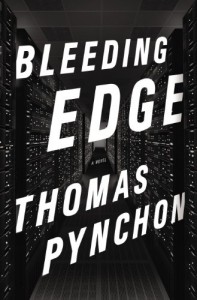 I don't care if this is the worst novel ever. It's a NEW THOMAS PYNCHON BOOK.
I was actually thinking a few days ago how Pynchon should do a book about the Internet. Now I discover this. Do I get to claim partial credit?
Apparently there's a strip joint in the book called Joie de Beavre. Too good.
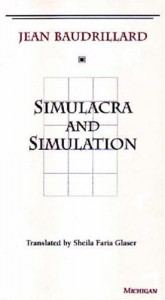 I've been meaning to read this for a long time. Baudrillard's ideas have always struck me as incredibly sensible in the (at times, very stupid) world we live in.
 Darkly hilarious and full of many fine things, not the least of which is Robertson Davies' delightful lexicon. The reader will encounter aposiopesis and apotheosis, contumaciously and hoyden and costive and nugacities and pismire and emmet and orgulous and even borborygmi. Not to be read in public by those with an unpleasant laugh.
One might write pages on Tempest-Tost, but it is simpler and more instructive to simply point to the work itself, as Davies' creations need no bedizenment.

Hyperloop Alpha
 Few are gifted with the power of foresight. We've all heard the story of the producer who turned down the Beatles (although to be fair, guitar music was sort of on the way out...) or the guy who predicted that flying would never get off the ground.
So it is not without some trepidation that I make my own bold prediction: Hyperloop probably won't happen. Certainly not in the immediate future, anyway. It's a visionary idea but not an implementable one, at least not as conceived here.
The first thing the Internet criticized about Hyperloop was safety—everyone started worrying that terrorists would target it. But that's a pretty lousy reason to not build something. Heck, we still build bridges and skyscrapers and subways and all manner of other potential terrorist targets. This sort of "if you build it, they will come" logic results in stagnation, and as long as we can collectively avoid it, there shouldn't be any problem with respect to Hyperloop.
Next, people jumped on the physics of Hyperloop, claiming it would be too fast or that an accident would result in massive pileups. Of course, the calculations we've seen are just preliminaries, but the G forces resulting from going from 1200 km/hour to a standstill in thirty seconds aren't that bad; it'd feel more like a roller coaster than a death ride. And so if one pod broke down, the rest could feasibly stop in half a minute with few adverse effects. The quality of this system would depend on the braking system and the overall computer control mechanisms, two things we haven't heard much about yet from Musk. But I'm confident these issues will get worked out as the idea evolves.
Now Dr. Drang has a few qualms about the engineering behind Hyperloop, and many people have made similar accusations over the past few days. I'm not an engineer so I'll stay out of it, but it's clear that the proposal is at the very least contentious.
The third problem—and this is a damning one, I'm afraid—is the price. Elon Musk has projected costs just under 7 billion dollars; compare to the $70-billion hig-speed rail project California is currently investigating. The pricing sounds attractive but it fails to hold up to scrutiny. It's been widely reported that a certain 100-mile stretch of land around Fresno will cost up to seven billion dollars (some towns are understandably very picky about who builds on their land and will extract a high price), which is more than Hyperloop's total cost. So it's clear that Musk is hoping to use government land for free, or at least on the cheap. Whether that will end up happening is another matter, one I'll address later on.
The other issue with pricing is that the sort of steel tubing he's looking for will cost much more than he's anticipating. If you're not convinced, take a look at how much money oil companies pour into pipelines and compare with Musk's figures. A bit less believable.
So this project will cost more than 7 billion dollars. That's not the end of the world, you might say; the rail project will still be more expensive. True, but it's already got the funding allocated. The creaky wheels of government have finally turned enough to set things in motion, and Musk decides to unveil Hyperloop now? Perhaps this was unavoidable on Musk's part, but it's horrible timing. I don't expect the government to gear into reverse and go with Musk's prototype, stereotypes about bumbling bureaucrats be damned. And so Musk's possible government deal looks a lot less likely given the timeline of events in California.
From a public transit perspective, Hyperloop runs into a few problems too. Pods are set to leave stations every two minutes, with peak/rush-hour headway of 30 seconds. I doubt that twenty-eight people can exit a pod, let twenty-eight other people get in and sit down in under thirty seconds. Plus there will be security and long lines. Not to say that this entirely ruins the project's chances of viability, but it will slow down the system. Thus the maximum load capacity of 3200-odd people at peak seems a bit high.
This will in turn affect ticket pricing (ceteris paribus, fewer passengers implies higher ticket pricing), which decreases the attractiveness of the entire proposition. A $20 ticket sounds nice, but that cost would have to double along with headway time in order to pay off. And you can bet that airlines will do their best to keep this from production, since even a $50 Hyperloop ticket is a lot cheaper (and faster) than a SF–LA plane ride.
To be fair, Hyperloop is an open-source alpha. Musk hasn't committed the money to the project yet, and nobody's manufacturing pods or custom tubing. There's certainly room for growth. But as it stands now, I'm a little wary of the idea, and I don't think it will go anywhere just yet.
 There's a great moment in Kathryn Bigelow's otherwise-shifty Zero Dark Thirty where two characters are discussing some particular element of the search for bin Ladin. The first guy, Dan, expresses his frustration by saying "We don't know what we don't know." The other guy, Joseph, asks "What the fuck is that supposed to mean"? Dan shoots back: "It's a tautology".
The theatre wasn't very full when I went to see ZD30 (that was probably its Oscar death knell, come to think of it), but I found myself laughing along with the guy sitting behind me when Mark Boal's characters name-dropped tautologies. I can't say I giggled through the rest of the film (Jessica Chastain is pretty; the plot, not so much), but that moment was worth the price of admission.
That's sort of how I felt about Tractatus Logico-Philosophicus. I naturally found the sections discussing mathematics quite interesting. Not having yet read Russell and Whitehead's behemoth, Principalia Mathematica, Wittgenstein's definition of numbers was new for me. I'll admit that I don't see the utility of defining 2 times 2 as
[
Omega^{u,v}x = Omega^{2,2}x = ldots = Omega^{1+1+1+1}x = 4 text{ (LaTeX{} humour!)},
]
but I'm sure there's some logic (heh) to it. But the rest of the treatise didn't interest me terribly. Wittgenstein's discussion of pictorial and representational forms struck me as very basic, while other parts were almost incomprehensible. Perhaps more than a little ironic, given that the book basically deals with the problem of philosophy not explaining itself well. I knew I was in for a rough start when the first proposition reads 1. The world is everything that is the case but case isn't defined. I wonder whether contemporary linguistics takes Wittgenstein seriously or whether he's as out to lunch as de Saussure. (Maybe this is just me stirring the pot, but I don't find semiotics useful in the least.)
Philosophy has always sort of bothered me. Maybe it's because the only "philosophers" I know are insufferably lame university students. I think I prefer theology to philosophy, if only because I like the narrative more. (Apparently I am still a child.) I was pleasantly surprised, then, to see a bit of a theological influence in Tractatus. First, we have the title itself, a supposed corruption of a Spinoza work. Secondly, there're Wittgenstein's Ecclesiastes-channeling mantras about logic and knowledge. I haven't thought about it enough yet, but I bet the connections would make for an interesting thesis.
Anyway, it was an interesting read; I probably won't return to it though. I hear a lot of the work's arguments are considered to be wrong now, and I have a suspicion it has something to do with the Incompleteness Theorems. But it wasn't a half-bad read.
 Klein spins an interesting yarn about the connection between capitalism, neoliberal politics and torture. Whether some of the details are true is up for discussion. Whether her thesis is an indictment of "disaster capitalism" or of plain old human nature is another big question.
The connection between neoliberalism and free-market capitalism hardly seems disputable. We saw it in Chile with the Chicago School, we saw it in American foreign policy at the dawn of the 21st century. As for the use of political "shocks" to bring about change—that's basically common sense. People use times of upheavel to effect change.
But the whole torture thing is hardly confined to the capitalists' camp. Everybody tortures everybody else. It's silly to insist that torture is somehow exclusive to capitalists. To be fair, Klein's not arguing that. But neither is it fair to blame capitalists for torture while conveniently ignoring everybody else. (Again, Klein doesn't ignore the other side, but she hardly devotes enought ime to it.)
Sure, there might be a link between political upheaval, laissez-faire capitalism and torture, but anybody with a decent knowledge of 20th-century history could easily write a book connecting political upheaval, Communist ecomonimic policy and torture. Klein's accusations are oddly non-specific for her to be pointing the finger exclusively at disaster capitalism. And when she really digs in and starts lobbing grenades, the attentive reader is forced to take a step back and double-check all of her research. It's easy to twist the facts to fit a particular narrative, and readers who want to make any sense out of this story will need to play Editor with Klein's book.
It's not all bad. After all, Klein has a point. But her point is just too unscientific: if she wanted to show conclusively that disaster capitalism is solely at fault, should she not have also established the innocence of all other parties? Saying "disaster capitalism is evil" does not necessarily imply that globalization and socialist economics are saintly and virtuous. Finding the truth with the help of The Shock Doctrine is a bit of a balancing act. At least Klein got us up to the rafters.
 I used to listen to a lot of 5by5 podcasts back in the day—Build and Analyze, The Talk Show, Hypercritical, Back to Work. (Funny how Merlin Mann of all people is the only one still doing this gig.) John Siracusa's shows often went over my head (me not being a master programmer and all), but his two-parter on Walter Isaacson's Steve Jobs was a masterstroke that even I could understand.
Basically Siracusa claims that Isaacson was not the right man for the job. Now I don't know a whole lot about how to write a great biography, and maybe J-Sir doesn't either, but his criticisms are nonetheless quite valid. Isaacson apparently isn't the biggest tech guru in the game, which makes him a weird choice. I guess I'm interested to see how off Isaacson is and to compare my thoughts with Siracusa's.
Last year I was sure somebody would give me this for my birthday, but nobody did. Perhaps I'll have to buy it myself. Maybe if I can get through the rest of the books on my shelf.